
Semiconductor Process Material Partnerships: A Qualification-to-Volume Playbook
Semiconductor Process Material Partnerships: A Qualification-to-Volume Playbook
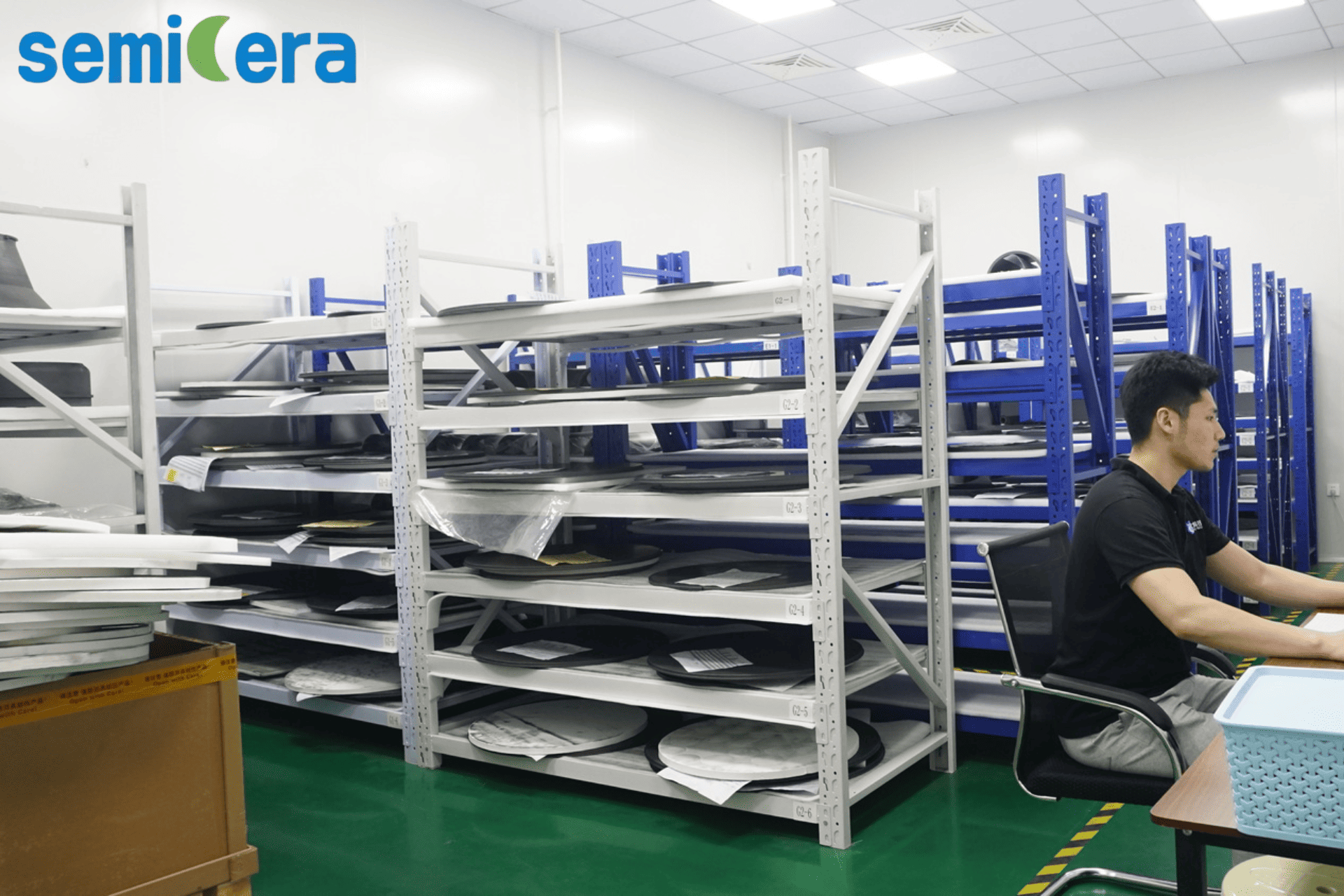
Finished-goods storage supports repeatable long-term semiconductor process material supply.
The Real Challenge After Supplier Selection
Sustained semiconductor production depends on more than a single purchase order. Epitaxy, etch, crystal growth, oxidation, and diffusion all rely on semiconductor process material that must remain pure, dimensionally stable, and repeatable over long production cycles. A partnership playbook for process materials should cover production capacity, quality control, process-specific performance data, commercial flexibility, and after-sales support. This guide explains how a buyer can move from supplier selection to volume execution, and what a long-term partner such as Semicera should be able to demonstrate at each step.
The Risk of Treating Semiconductor Process Materials as Spot Purchases
Fabs and equipment makers sometimes treat process materials as spot purchases. That approach creates avoidable risk in critical hot-zone and wafer-contact components. A susceptor, wafer boat, furnace tube, etch ring, or insulation felt must perform consistently across thousands of thermal cycles. If material purity varies, coating adhesion changes, or cracking appears after installation, the fab faces particle contamination, unplanned maintenance, and wafer yield loss.
Common failure modes include coating and material cracking. One control method is high-temperature simulation testing followed by strict thermal cycle screening to eliminate defective products before shipment. Buyers should look for these controls when selecting a long-term partner. The goal is not simply to buy a part, but to create a repeatable supply chain for the life of the process.
Industry Background: Demand Is Moving Toward Specialty Process Materials
According to SEMI, global semiconductor materials market revenue reached $67.5 billion in 2024, up 3.8% from the prior year. Wafer fabrication materials, which include process chemicals and CVD materials, rose 3.3% to $42.9 billion. Within this environment, specialized process-material segments are expanding. Verified Market Reports estimates the global semiconductor graphite market at approximately $1.62 billion in 2024, with a projected 7.2% CAGR through 2032. TECHCET estimates quartz fabricated parts used in semiconductor manufacturing reached around $2.21 billion in 2024, growing about 5.5% annually.
These numbers explain why long-term supply decisions matter. Graphite, SiC-coated graphite, TaC-coated graphite, quartz, and carbon-fiber composites are not interchangeable commodities. Their manufacturing requires purification, machining, coating, inspection, and stable logistics. CVD SiC coating is already the dominant protection method for graphite susceptors in MOCVD and epitaxial reactors because of its high purity and thermal conductivity. TaC coatings are gaining traction for ultra-high-temperature processes such as SiC crystal growth. Therefore, a partner's material scope and manufacturing depth directly affect a fab's ability to scale.
What a Long-Term Semiconductor Process Material Partner Must Provide
Long-term semiconductor process material supply starts with four foundations: manufacturing scale, material breadth, 100% testing, and commercial flexibility. A supplier should be able to support both initial qualification and repeat orders without changing material behavior.
Manufacturing Scale and Material Breadth
Semicera (Ningbo Miami Advanced Material Technology Co., Ltd.) is a semiconductor materials and components manufacturer integrating R&D, production, and global sales. The company was founded in 2015 and operates a 40,000 m² manufacturing system with 600+ employees, more than 50 advanced production lines, dual research centers, and three large-scale production bases. Annual output is 120,000 units, and monthly production capacity exceeds 10,000 units. More than 100 engineers work in R&D, representing over 25% of the workforce. This scale matters because a long-term process material partner must be able to absorb demand growth without compromising purity or lead time.
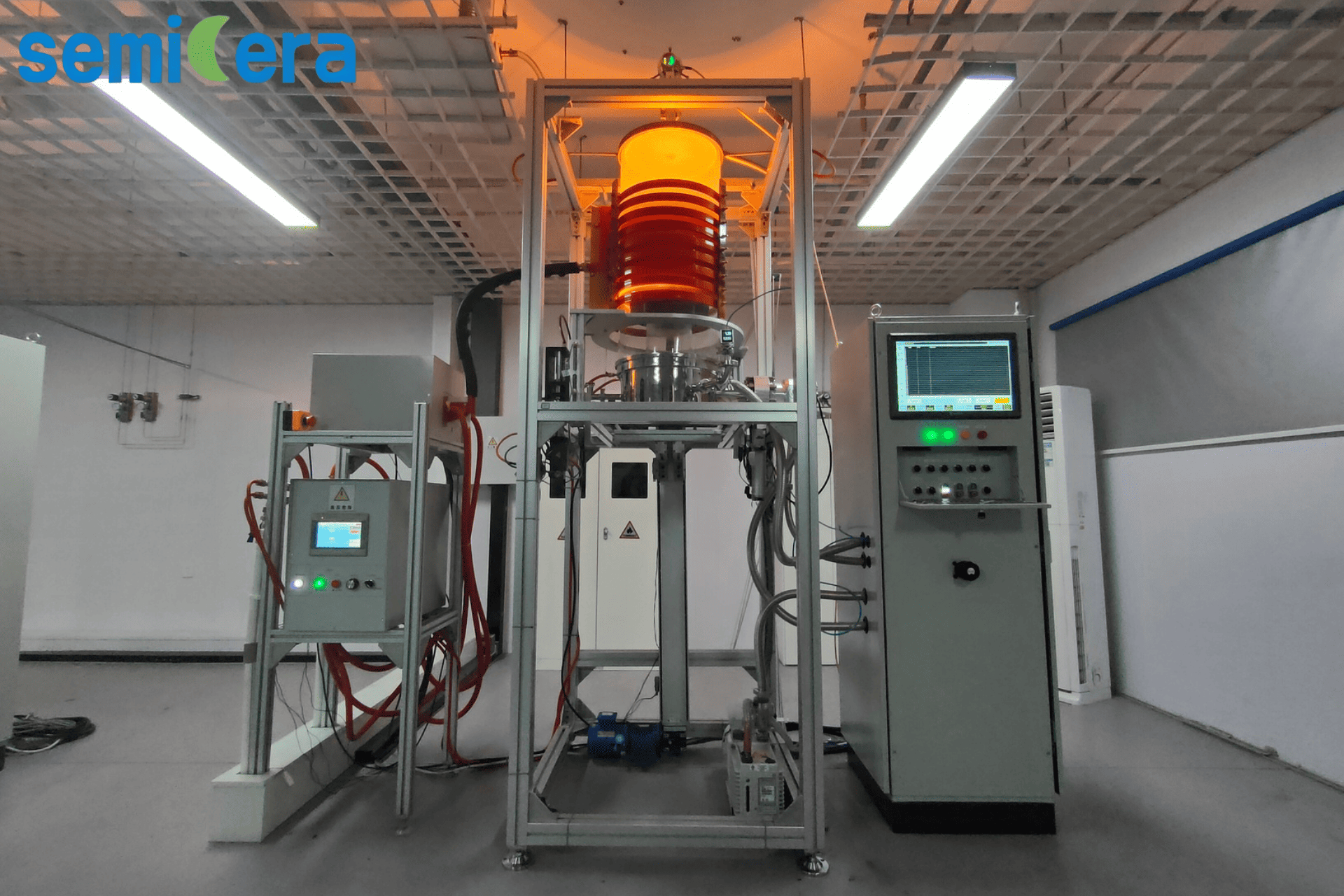
R&D furnaces support process-specific material validation and long-term manufacturing consistency.
Quality Control and 100% Testing
Quality control follows 100% test standards, meaning each unit is tested before shipment. For coating and material cracking risks, Semicera applies high-temperature simulation tests and strict thermal cycle screening to remove defective products. The quality inspection lab and finished-goods warehouse support this commitment. A buyer should verify whether a supplier can demonstrate these controls in production, not just in marketing material.
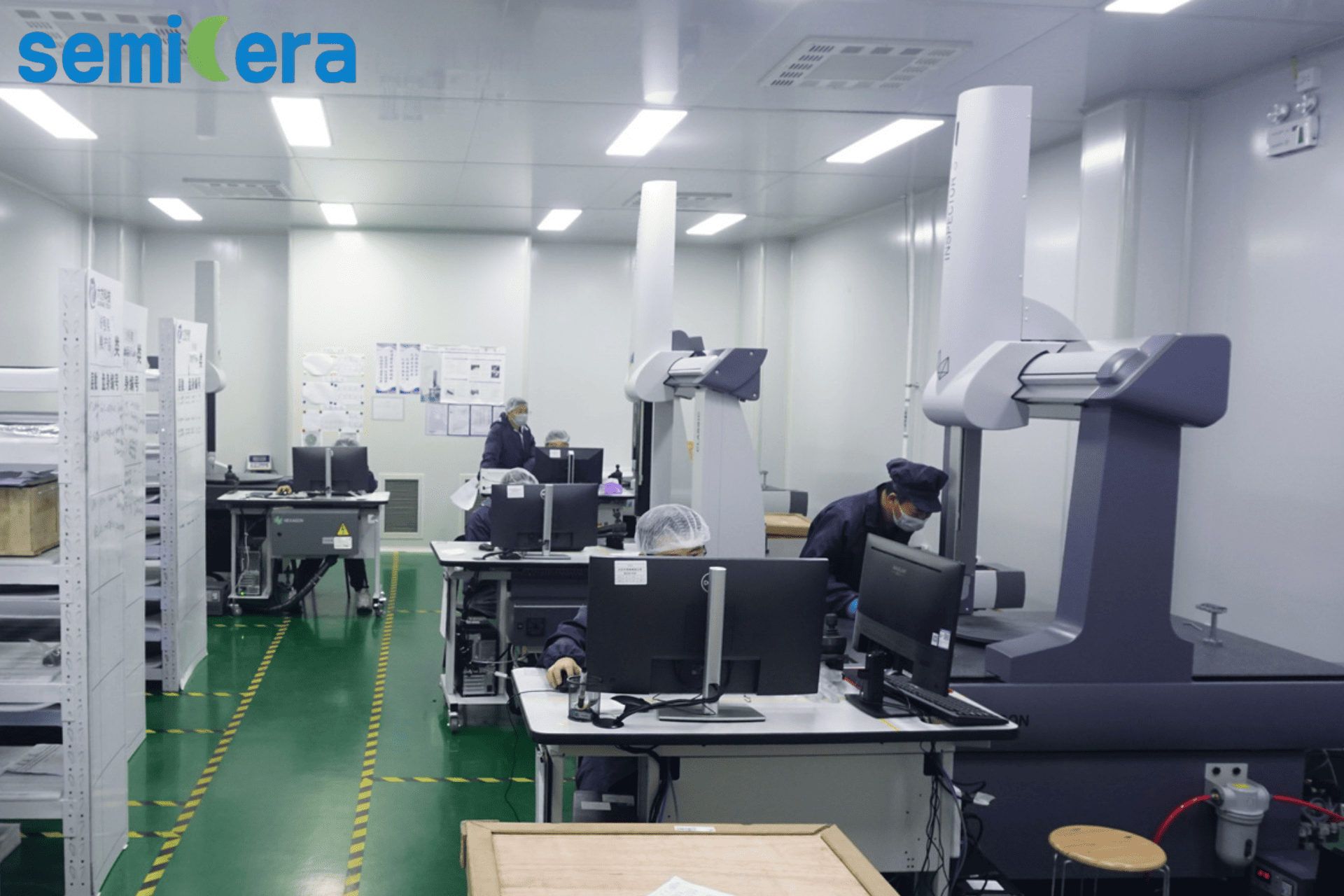
Pre-shipment testing is part of Semicera's quality-control flow for process-critical components.
Process-Specific Product Portfolio
The product portfolio includes CVD SiC coating parts, CVD TaC coating parts, CVD PyC coating parts, SiC ceramic parts, semiconductor advanced ceramic parts, quartz parts, carbon fiber parts, and CFC material. These products serve LED, IC, third-generation semiconductors, epitaxy, MOCVD, CVD, and photovoltaic applications. Flagship products include SiC-coated graphite susceptors, TaC-coated diversion rings, SiC wafer boats, semiconductor quartz parts, and high-purity isostatic graphite components with ash content ≤5 ppm.
Commercial Structure for Qualification and Scale
Semicera offers an MOQ of 1 unit, delivery under EXW/FCA/DAP/DDP, and pre-shipment testing as the acceptance method. Payment terms differentiate new customers from long-term cooperation customers: new customers pay 100% T/T in advance; long-term cooperation customers pay 70% T/T in advance and 30% before shipment. This structure supports small qualification orders and then moves to volume supply.
Step-by-Step Qualification and Execution Workflow
Step 1: Audit Production Capacity and Delivery Risk
Check factory size, output, monthly capacity, and export experience. Semicera exports to EU, US, and Asia, with roughly 40% of output in export markets. The factory area, raw material warehousing, and finished-goods storage provide evidence of delivery capacity.
Step 2: Verify Quality-Control and Testing Protocols
Confirm 100% test standards, pre-shipment testing, and thermal cycle screening. For coated components, ask how coating crack risks are screened. High-temperature simulation tests and strict thermal cycle screening are concrete risk-control measures that can be verified during supplier qualification.
Step 3: Map Materials to Process Steps
Identify which components are needed for epitaxy, etch, crystal growth, oxidation, diffusion, or LPCVD. A partner should be able to supply multiple material families from one source, reducing qualification overhead and simplifying supply-chain governance.
Step 4: Validate Coating and Material Performance
Review coating thickness, purity, density, temperature capability, and other parameters. For example, Semicera's CVD SiC coating graphite carrier has a typical coating thickness of 100 µm, 6N purity, and a coating hardness of 2500 Vickers. The CVD TaC coating graphite carrier has a coating thickness of 25–45 µm, a maximum operating temperature of 2200°C, and resistance to NH3 and H2 etching.
Step 5: Agree on Commercial and Logistics Terms
Use the MOQ of 1 unit for qualification orders. Clarify delivery methods such as EXW, FCA, DAP, or DDP, and confirm that the acceptance method is pre-shipment testing. Payment terms should be explicit for both new and long-term cooperation customers.
Step 6: Establish After-Sales and Support Channels
For export markets including EU, US, and Asia, Semicera provides remote support after-sales service. This matters for troubleshooting, process matching, and maintaining continuity across long equipment lifecycles.
Use Cases Across Epitaxy, Etch, and Crystal Growth
Silicon and Silicon Carbide Crystal Growth
Silicon and silicon carbide crystal growth place extreme demands on hot-zone materials. Semicera's CFC material uses a 2.5D or 3D needle-punched carbon fiber matrix, with tensile strength of 90–140 MPa, bulk density of 1.65–1.78 g/cm³, and ash content ≤10 ppm after halogen purification. Compared with conventional solid graphite hot-zone components, CFC material offers 3 to 5 times longer service life under continuous high-temperature pulling, over 20% higher structural load capacity, similar cost, and up to 50% energy saving. Rigid felt and soft felt provide insulation; rigid felt can be processed up to 2500°C in inert vacuum, and soft felt has carbon content ≥99.99%. CVD solid SiC parts are available with density ≥3.21 g/cm³, 0% porosity, and thermal conductivity ≥150 W/m·K. For SiC crystal growth, CVD SiC particle provides high-purity raw material with ≥99.9999% purity and a grain size range of 1.0–5.0 mm.
Epitaxy and MOCVD
For epitaxy, SiC-coated graphite susceptors are critical. Semicera's CVD SiC coating graphite carrier is designed for MOCVD multi-pocket wafer susceptor and tray applications. Its typical coating thickness is 100 µm, with 6N purity and an FCC beta-phase polycrystal, (111)-oriented structure. The CVD TaC coating graphite carrier uses a cubic TaC matrix and provides outstanding resistance to ammonia and hydrogen etching. Compared with OEM parts, SiC/TaC-coated parts from Semicera are reported to be 30–40% lower in cost, carry the same service cycle, improve epitaxial layer uniformity by 10–15%, and generate less than 5% particle generation. The ultra-pure CVD SiC coating also reduces micropipes, pits, and carrots on the epi layer.
Oxidation, Diffusion, and LPCVD
For oxidation and diffusion, quartz furnace tubes and quartz wafer boats are common. Semicera quartz furnace tubes use high-purity fused quartz with hydroxyl content below 20 ppm, and low-hydroxyl versions are available below 5 ppm. Quartz wafer boats use GE214 or equivalent ultra-high-purity fused quartz, with a continuous working temperature of 1150°C and SiO2 content ≥99.99%. For longer service life, SiC wafer boats use SiSiC or RSiC and have more than 5 times the lifespan of traditional quartz boats, up to 1600°C, with excellent thermal shock resistance. SiC furnace tubes are available for LPCVD and high-temperature oxidation applications, with maximum length up to 3000 mm.
Etch Process Materials
For etch, Semicera offers etch rings made from pure CVD solid SiC or high-purity silicon single crystal. The plasma erosion rate is below 2 nm/min under high-density CF4/O2 plasma, flatness tolerance is ≤10 µm, and total metal purity is below 5 ppb. A long-term partner that can supply these components with stable impurity levels helps reduce etch chamber variability.
Side-by-Side: Long-Term Material Comparisons
The table below consolidates comparison data from Semicera's material specifications and product documentation.
| Comparison | Baseline | Reported Improvement | Best Fit |
|---|---|---|---|
| CFC material | Conventional solid graphite hot-zone components | 3–5 times longer service life; over 20% higher structural load capacity; up to 50% energy saving; similar cost | Silicon crystal growth |
| SiC/TaC coated parts | OEM parts | 30–40% lower cost; identical service cycle; 10–15% better epitaxial layer uniformity; less than 5% particle generation | Epi process |
| SiC wafer boat | Traditional quartz boat | More than 5 times service lifespan; up to 1600°C working temperature | Oxidation / diffusion |
Frequently Asked Questions
What compliance and testing standards should a long-term semiconductor process material partner meet?
A long-term partner should be able to document its quality-control system. Semicera follows 100% test standards, meaning each unit is tested before shipment. For coating and material cracking risk, high-temperature simulation tests and strict thermal cycle screening are used to eliminate defective products before delivery. Buyers should request pre-shipment test evidence as part of acceptance.
What production capacity is needed for long-term semiconductor process material supply?
The supplier must support both qualification quantities and volume orders. Semicera operates a 40,000 m² facility with more than 50 advanced production lines, 600+ employees, an annual output of 120,000 units, and monthly production capacity over 10,000 units. More than 100 engineers are dedicated to R&D, representing over 25% of the workforce.
How do Semicera's SiC/TaC coated parts compare with OEM parts on cost and maintenance?
According to Semicera's comparison data, SiC/TaC-coated parts can be 30–40% lower in price than OEM parts while maintaining the same service cycle and maintenance interval. They also improve epitaxial layer uniformity by 10–15% and generate less than 5% particle generation.
Can I evaluate a single unit before committing to volume?
Yes. Semicera's MOQ is 1 unit. Pre-shipment testing is the acceptance method, so a buyer can qualify one carrier, boat, tube, or ring before scaling. This reduces the risk of introducing a new semiconductor process material into a high-volume fab.
What delivery and payment terms support a long-term supply relationship?
Semicera supports EXW, FCA, DAP, and DDP delivery methods. Payment terms are 100% T/T in advance for new customers and 70% T/T in advance with 30% before shipment for long-term cooperation customers. Remote after-sales support is available for export markets including EU, US, and Asia.
Conclusion: Turn Supplier Selection into a Supply Partnership
Long-term semiconductor process material supply is not a spot-market decision. It requires a partner with production scale, process-specific knowledge, 100% testing, and commercial terms that allow qualification first and scale second. Semicera offers this combination for semiconductor material, epitaxy process material, annealing process material, etch process material, and silicon carbide crystal growth material applications.
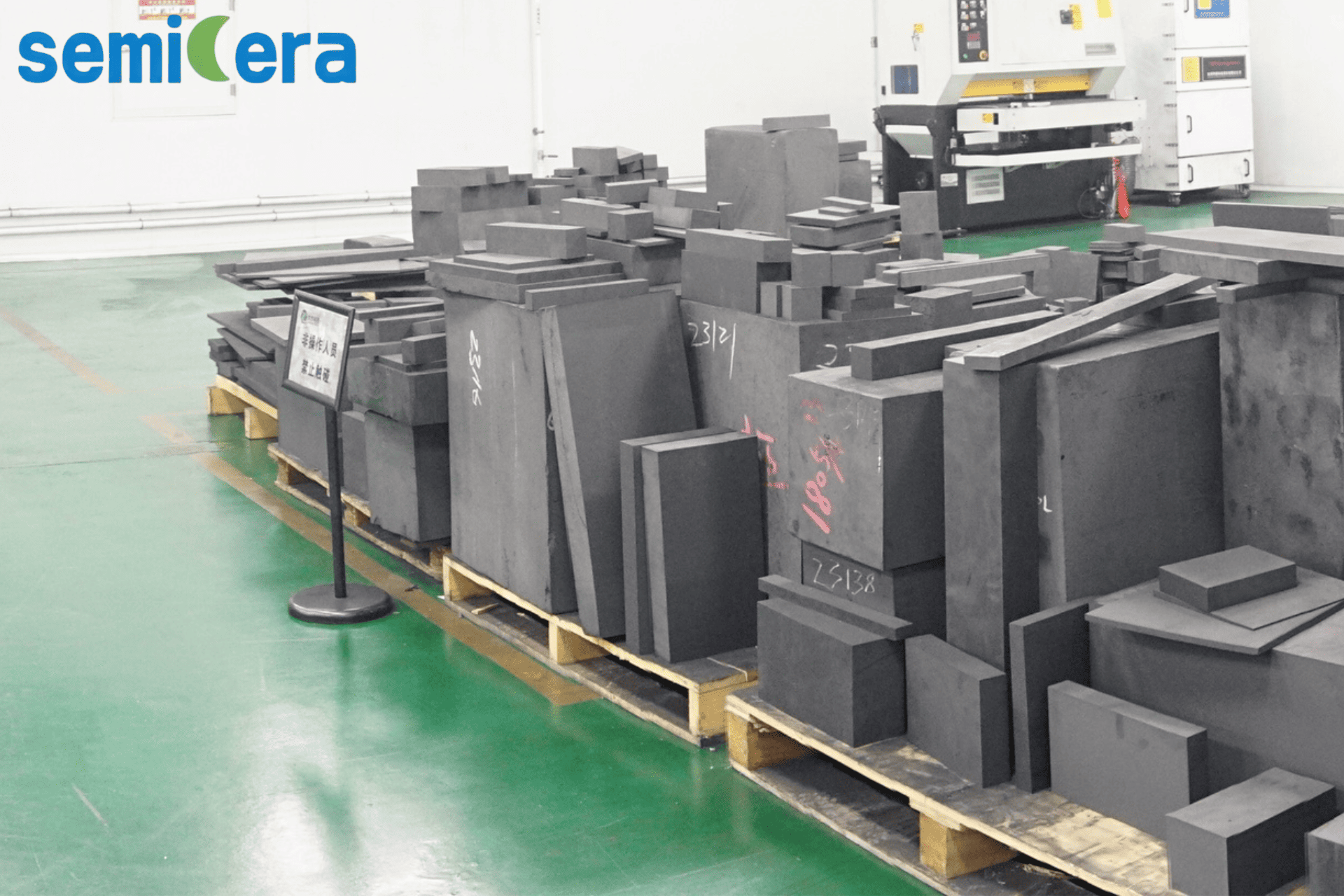
Controlled raw material stock is the starting point for stable process-material supply.
If you are at the execution stage and need to evaluate a specific component, request a sample, or discuss a supply agreement, contact the Semicera team.
Download Semicera Catalog (PDF)
Email: sales05@semi-cera.com
Tel / WhatsApp: +86 15957878134
Have Questions or Need More Details?
Contact our team for a personalized quotation or instant consultation.
Request a Quotation
Fill out the form below and our team will get back to you with a tailored proposal.
WhatsApp Direct Chat
Prefer to chat in real-time? Message us on WhatsApp for instant assistance & quick answers.
- Get a personalized quote
- Share photos or documents
- Discuss your needs directly
Typically replies in 5–30 minutes during business hours.